Thankful excels in multi-channel support and real-time reporting, making it ideal for organizations seeking comprehensive engagement through email, chat, and social media. Replicant, with a focus on voice automation, offers robust call handling, serving companies with high call volumes requiring deterministic AI processing. Thankful has an employee base of 14, while Replicant employs about 180, indicating a difference in operational scale.
Best for
Thankful is the better choice when a business needs efficient automation for frequent queries across multiple communication channels and robust CRM integration.
Best for
Replicant is the better choice when a company requires handling large volumes of voice-based customer interactions with an emphasis on deterministic reasoning and PII protection.
Key Differences
Verdict
For teams prioritizing multi-channel engagement and needing tailored automation across those platforms, Thankful offers a compelling package with its extensive integrations and analytics. Conversely, companies dealing with high-volume voice interactions will find Replicant's AI-driven deterministic approaches and ability to handle peak call traffic advantageous. Each tool's specific strengths cater to distinct customer service needs, making the choice largely dependent on the primary mode of communication use.
Thankful
"Thankful" is highly praised for its efficient customer support automation, which users say improves response times and enhances customer satisfaction. However, some complaints arise over the tool's occasional misinterpretation of complex customer queries. Pricing is generally viewed as competitive, aligning well with the features offered, although some users express a desire for more tier flexibility. Overall, "Thankful" maintains a solid reputation as a reliable customer service automation tool, with many endorsing its positive impact on support workflows.
Replicant
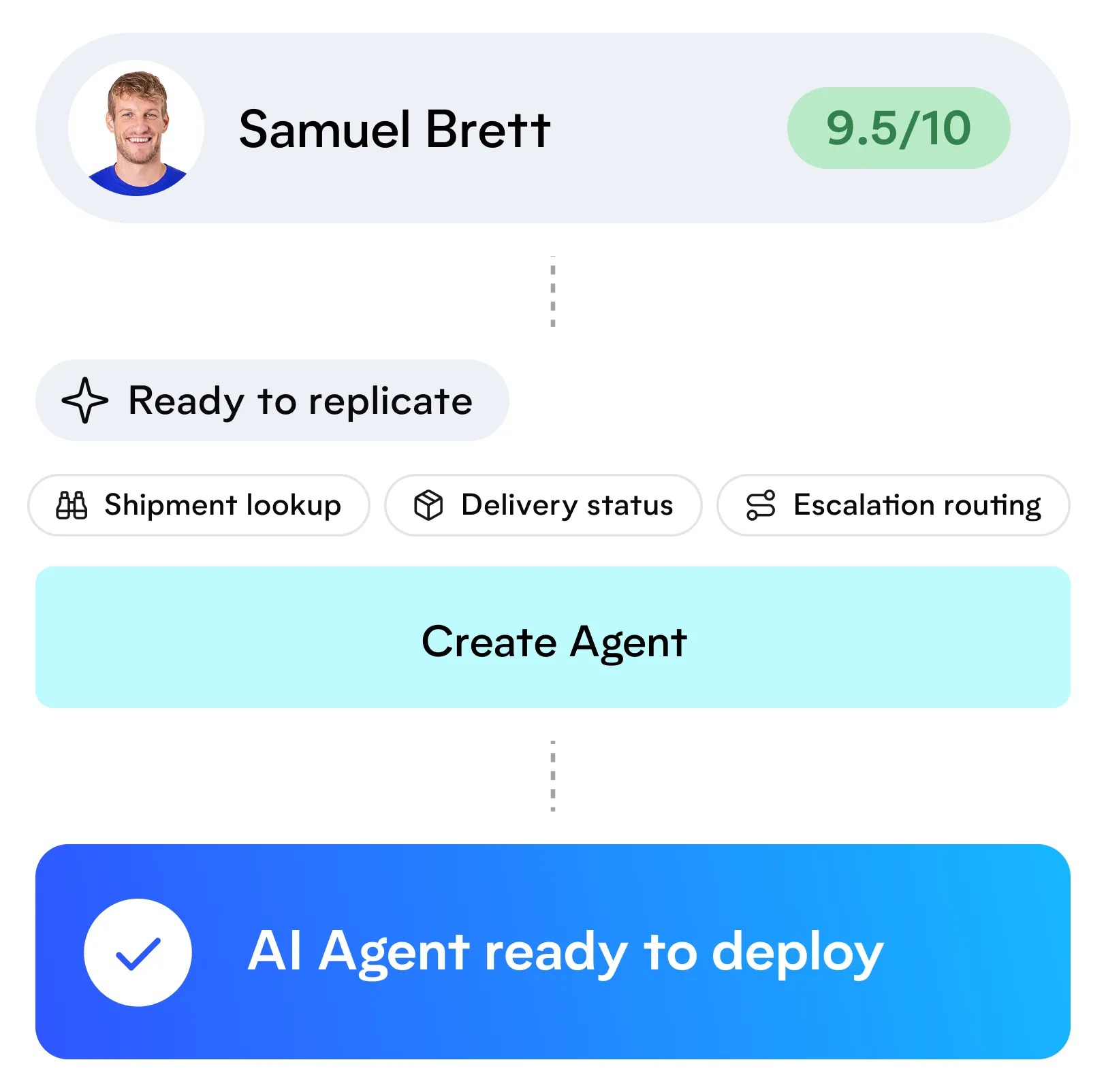
Replicant scales your best agents with AI—automating routine calls, improving accuracy, reducing wait times, and giving every customer fast, consisten
Users often praise Replicant for its ability to handle specific and structured tasks effectively, such as marketing plans and financial analyses. Complaints primarily revolve around issues with the tool's integration limits and capacity constraints, which some find restricting. Opinions on pricing are mixed, with users appreciating its functionality but sometimes feeling restricted by usage limits associated with the cost. Overall, Replicant is seen as a valuable tool with strong performance in structured tasks but may need further development in scalability and integration capacity.
Thankful
-40% vs last weekReplicant
-46% vs last weekThankful
Replicant
Thankful
Replicant
Thankful
Replicant
Thankful (6)
Replicant (8)
Only in Thankful (8)
Only in Replicant (10)
Shared (6)
Only in Thankful (9)
Only in Replicant (2)
Thankful
Replicant
Thankful
Replicant
Thankful
No screenshots
Replicant
Thankful
Replicant
Thankful
I'm a software engineer with a decade of experience. This is how I'd approach learning to build apps using Claude Code if I were starting from scratch today:
I'm going to describe a person this post is for, if this is you, I think I can be of some assistance: * you are new to coding * you are blown away by how it unlocks this magical ability that was previously inaccessible without years of training and effort * you've daydreamed of business and app ide
Replicant
Only in Replicant (5)
Replicant is better suited for handling peak call times due to its deterministic AI and voice automation capabilities designed to manage large call volumes efficiently.
Thankful's pricing is viewed as competitive with a potentially less flexible tier system, while Replicant employs a subscription model with clear tiered usage limits.
Given its larger user base and funding, Replicant might offer more community resources, although specific data on support forums and user group activity would be needed for a precise comparison.
While both tools provide integration capabilities, their distinct focuses on multi-channel text versus voice automation suggest complementary, rather than overlapping, implementation benefits.
Given its smaller scale and focus, Thankful might present a simpler onboarding process, although the ultimate ease depends heavily on specific organizational needs and existing infrastructure.


