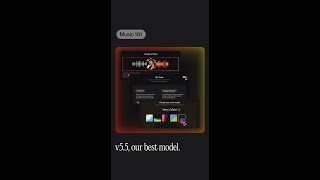
Start with a simple prompt or dive into our pro editing tools, your next track is just a step away.
Suno appears to be a lesser-known AI tool compared to others in the space, with social mentions predominantly highlighting AI tools that are perceived as expensive and potentially replaceable by cheaper alternatives. There is limited specific feedback on Suno’s unique strengths or weaknesses, suggesting it might not yet have a strong distinguishing presence or vocal user base in social media discussions. The pricing sentiment for AI tools in related posts hints at concerns over high costs, though Suno's pricing isn't specifically mentioned. Overall, Suno's reputation seems to be underdeveloped with sparse mentions and little detailed user feedback.
Mentions (30d)
1
Reviews
0
Platforms
3
Sentiment
15%
3 positive

Suno appears to be a lesser-known AI tool compared to others in the space, with social mentions predominantly highlighting AI tools that are perceived as expensive and potentially replaceable by cheaper alternatives. There is limited specific feedback on Suno’s unique strengths or weaknesses, suggesting it might not yet have a strong distinguishing presence or vocal user base in social media discussions. The pricing sentiment for AI tools in related posts hints at concerns over high costs, though Suno's pricing isn't specifically mentioned. Overall, Suno's reputation seems to be underdeveloped with sparse mentions and little detailed user feedback.
Features
Use Cases
Industry
information technology & services
Employees
410
Funding Stage
Series C
Total Funding
$250.0M
5 Expensive AI Tools... And Their Free Clones (You won’t believe how much you’re overpaying.) 💸 ChatGPT? $200/month 💸 Midjourney? $60/month 💸 ElevenLabs? $99/month 💸 Aiva? $54/month 💸 Tome? $16
5 Expensive AI Tools... And Their Free Clones (You won’t believe how much you’re overpaying.) 💸 ChatGPT? $200/month 💸 Midjourney? $60/month 💸 ElevenLabs? $99/month 💸 Aiva? $54/month 💸 Tome? $16/month But here’s the twist. Their free alternatives do 80–95% of the job. For $0. 🔥 Research: DeekSeek AI 🎨 Image Generation: Leonardo AI 🎙️ Text-to-Speech: Speechma 🎼 Music Generator: Suno AI 📊 Presentation Builder: Gamma Whether you're a content creator, founder, student, or solo builder 👉 You don't need to burn your wallet to build smart. Save this post so you always know where to find powerful free tools. #AITools #ProductivityTools #FreeAI #NoCode #SoloFounder #Bootstrapping #StartupTips --- Would you like a shortened caption version for TikTok/Instagram reels under 220 characters?
View originalPricing found: $0 /month, $8 /month, $24, $24 /month, $72
Built an MCP server so Claude can generate music, images, and video natively. One config block.
I've been using Claude Code daily for the last few months and kept hitting the same wall: I'd ask Claude to produce a creative artifact (a song, a cover, a short video) and end up writing the API glue myself, then pasting results back into the chat. Felt backwards. So I built an MCP server around my AI generation platform. It exposes three tools to Claude: - aw_generate_music (Suno, full songs with lyrics or instrumental) - aw_generate_image (Z-Image Turbo, Wan 2.5 Spicy, Grok Imagine Quality, GPT-Image-2, Nano Banana 2, and others) - aw_generate_video (Kling 3.0 Standard/Pro/4K T2V + I2V, Wan 2.2, Hailuo 02, Seedance, Grok video) One key. One credit pool. The agent picks the right model for the prompt. Install: npm install -g u/aetherwave-studio/mcp Claude Code config (~/.config/claude/mcp.json or wherever yours lives): { "mcpServers": { "aetherwave": { "command": "npx", "args": ["-y", "@aetherwave-studio/mcp"], "env": { "AW_API_KEY": "aw_live_YOUR_KEY_HERE" } } } } Restart Claude. Done. Prompts that work end-to-end without any additional setup: "Generate a 60-second lo-fi track for a study playlist, then make me 3 album cover options in a retro Japanese print style." "Take this product photo and generate a 5-second cinematic intro video for the product launch." (drop the image in chat first) "Write the script for a 30-second ad about my SaaS, then generate the voiceover-friendly music bed and a matching motion-graphics opener." The agent decomposes, picks tools, runs them, hands you back the artifacts. Repo: https://github.com/AetherWave-Studio/aetherwave-mcp Dashboard + key: https://aetherwavestudio.com/developers Happy to answer questions about how I structured the tool schemas, what worked, what I'd do differently. v0.1.0, real users on it already, treating community feedback as the next steering signal. submitted by /u/Acrobatic-Result9667 [link] [comments]
View originalImpressed with Video - it's come a LONG way
I use GPT 5.5 to build a story, then turn that into a suno song, and then generate a 'storyboard' (usually 12 panels, sometimes more or less), and use THAT as the input into NeuralFrames (lyrics mode). The below are on SeeDance 1.5 and Kling 3.0 and i was just SO impressed with the quality. This is on autopilot one click. It's Complicated - https://www.youtube.com/watch?v=-Z56gJsvHTU Monkey - https://www.youtube.com/watch?v=4MheU-kHhRk submitted by /u/Futz_TheWhiteRabbit [link] [comments]
View originalMaking games with kids is fun!
Start Screen Just sharing what came out of a weekend. My son (10) and his cousin (10) love games and asked me if they can "make a game", since they've seen me in the past couple of months, vibecoding different little helpers. I of course explained that it's not a one-shot solution and that they first should sit down, plan the game out and write down what they like the game to be, to look like, to feel, etc. So they did: the assets, the obstacles, the design style, what world it plays in, how it should look. A 3-lane endless runner in a neon city. Dodge robots, jump lasers, grab coins. Subway Surfers with their own spin. I handled the prompting in Claude Code. The design calls came from them. They tested, found bugs, kept asking for stuff and fleshed out the world more and more. Billboards along the road. Flying cars between the buildings. A slow-mo death sequence and much more. What got me wasn't the code part, it was watching them stay locked in for hours on something they had actually invented. Though my son thought at first that they could easily sit down with me for 6 hours straight without getting bored, after three hours he admitted that it can sometimes be a bore. So, since the game already was playable, I gave them one desktop computer to test on and one mobile phone, and then they switched into active beta testers. Giving me input constantly on how what feels and should work. Play it if you want: https://megarun.app .. and don't forget to put your name into the leaderboard! Works on desktop and mobile. Stack/Workflow: Three.js (single HTML file, no build step, importmap via CDN) Vanilla JS, ~4000 lines Vercel serverless functions for the API (leaderboard + play counter) Upstash Redis as storage (sorted set for leaderboard) Rate limiting + CORS + profanity filter in the backend Higgsfield for logo, warning splash, billboard ads Suno for background music 3D assets generated procedurally in Three.js (boxes, cylinders, a few spheres) Initial design work submitted by /u/jacksonjjacks [link] [comments]
View originalAlien Pinball Postmortem - How I made a full physics pinball game with Claude
Postmortem: Alien Pinball — built with Claude + ChatGPT + Suno + LittleJS Just shipped a browser pinball game. Short writeup of the AI workflow in case it's useful here. The game — Full physics pinball: multiball, an A-L-I-E-N rollover multiplier (caps at 5x), skill shots, escalating combos, outlane gutter saves, and a wizard-mode centipede boss you fight while juggling 3 balls. Browser, mobile-friendly, no install. Play it: https://focaccai.itch.io/alien-pinball Setup. Claude Code Max, Opus model for the heavy lifting. Roughly half my input was via speech-to-text — talking at the codebase rather than typing — the other half was typing plus a lot of manual code editing. It genuinely felt co-developed rather than code-generated: describe what I want, riff with Claude, dive in by hand to steer or clean up. Tool stack Code: Claude. All game logic, custom Box2D parts (slingshots, drop targets, spinners, ramps, ball locks, break targets), plus a full in-game table editor I built so I could drag/place/tune every part visually. Reusable for future pinball games. Art: ChatGPT image gen. I had Claude write the image prompts too. Music: Suno 5.5 — three tracks, lots of iteration to find the right vibe. Claude wrote the music prompts. Sounds: ZzFX — every sound generated procedurally at game start, no audio files. Claude tuned the parameters by ear-by-ear iteration. This combo was a joy with AI. Engine: LittleJS + Box2D WASM. Small, fast, AI handles it beautifully — minimal API surface, no framework ceremony to wade through. The art trick that actually worked. I exported a silhouette of the collision geometry (walls, ramps, bumpers, drop targets — exact positions) and handed it to the image generator with: "create an alien-themed pinball playfield that exactly matches this silhouette." Took many generations plus manual compositing — stitching the best parts from different outputs — but conceptually it nailed the brief on the first try. The art lines up with the physics because the physics is the prompt. Co-developed, not just code-generated. A bunch of design ideas came from the AI. The bumpers being giant eyeballs? Came out of an image gen, I just ran with it. I also kept asking Claude pinball-specific design questions ("what does a complete pinball table have?", "how should wizard mode work?", "what's missing here?"). I have plenty of video gamedev experience but very little pinball-specific, and Claude was a useful domain consultant for filling in genre conventions and sanity-checking the system. Things that came together easily: The alien centipede boss — multi-segmented, loses tail segments as you hit it, speeds up and turns red. Worked basically first try. An AI debug player that auto-flips and knocks the ball around. Not great, but good enough to flip on and watch while I think. Surprisingly useful — you get ideas just watching the machine play your machine. What still needed me: feel. Restitution values, flipper torque, ramp curvature, slingshot kick angles, peg bounce. The git log has an embarrassing number of "tweak peg bounce" / "1.49 → 1.491" commits. The model can write the system; a human still has to sit there bouncing balls until it feels right. The polish tail is brutal. Last week of commits is sound passes, ramp angles, message priorities, and a multiball end-check race condition. All small. None optional. Budget for it. Happy to answer workflow / Claude / LittleJS questions in the comments. submitted by /u/Slackluster [link] [comments]
View originalAlien Pinball Postmortem - How I made a full physics pinball game with AI tools
Postmortem: Alien Pinball — built with Claude + ChatGPT + Suno + LittleJS Just shipped a browser pinball game. Short writeup of the AI workflow in case it's useful here. The game — Full physics pinball: multiball, an A-L-I-E-N rollover multiplier (caps at 5x), skill shots, escalating combos, outlane gutter saves, and a wizard-mode centipede boss you fight while juggling 3 balls. Browser, mobile-friendly, no install. Play it: https://focaccai.itch.io/alien-pinball Setup. Claude Code Max, Opus model for the heavy lifting. Roughly half my input was via speech-to-text — talking at the codebase rather than typing — the other half was typing plus a lot of manual code editing. It genuinely felt co-developed rather than code-generated: describe what I want, riff with Claude, dive in by hand to steer or clean up. Tool stack Code: Claude. All game logic, custom Box2D parts (slingshots, drop targets, spinners, ramps, ball locks, break targets), plus a full in-game table editor I built so I could drag/place/tune every part visually. Reusable for future pinball games. Art: ChatGPT image gen. I had Claude write the image prompts too. Music: Suno 5.5 — three tracks, lots of iteration to find the right vibe. Claude wrote the music prompts. Sounds: ZzFX — every sound generated procedurally at game start, no audio files. Claude tuned the parameters by ear-by-ear iteration. This combo was a joy with AI. Engine: LittleJS + Box2D WASM. Small, fast, AI handles it beautifully — minimal API surface, no framework ceremony to wade through. The art trick that actually worked. I exported a silhouette of the collision geometry (walls, ramps, bumpers, drop targets — exact positions) and handed it to the image generator with: "create an alien-themed pinball playfield that exactly matches this silhouette." Took many generations plus manual compositing — stitching the best parts from different outputs — but conceptually it nailed the brief on the first try. The art lines up with the physics because the physics is the prompt. Co-developed, not just code-generated. A bunch of design ideas came from the AI. The bumpers being giant eyeballs? Came out of an image gen, I just ran with it. I also kept asking Claude pinball-specific design questions ("what does a complete pinball table have?", "how should wizard mode work?", "what's missing here?"). I have plenty of video gamedev experience but very little pinball-specific, and Claude was a useful domain consultant for filling in genre conventions and sanity-checking the system. Things that came together easily: The alien centipede boss — multi-segmented, loses tail segments as you hit it, speeds up and turns red. Worked basically first try. An AI debug player that auto-flips and knocks the ball around. Not great, but good enough to flip on and watch while I think. Surprisingly useful — you get ideas just watching the machine play your machine. What still needed me: feel. Restitution values, flipper torque, ramp curvature, slingshot kick angles, peg bounce. The git log has an embarrassing number of "tweak peg bounce" / "1.49 → 1.491" commits. The model can write the system; a human still has to sit there bouncing balls until it feels right. The polish tail is brutal. Last week of commits is sound passes, ramp angles, message priorities, and a multiball end-check race condition. All small. None optional. Budget for it. Happy to answer workflow / Claude / LittleJS questions in the comments. submitted by /u/Slackluster [link] [comments]
View originalSolo dev with 8 Claude windows + 1 orchestrator. AMA-ish, and tell me if I'm crazy.
Hey everyone, I'm not a senior engineer. I'm just a guy who got obsessed with what you can actually do when you stop using one AI at a time and start running a small team of them. Am doing a project where i use 8 to 10 claude code powershelle to run my project each of them have a specific function. I have Claude max 200 euros so I can use a lot of power. ight now I have 9 Claude Code windows open at the same time, each with a defined role: Major Dev — lead developer, makes the architectural calls Senior Dev — second dev, builds components and tests under Major Dev's direction Test Server — keeps the dev server alive 24/7 + runs Playwright Implémenter — handles routing and the glue code between features Débuggage — audits warnings, fixes bugs in parallel QA — walks through every screen, tests every button, checks WCAG/accessibility Graphisme — generates 2D assets (avatars, hero images, badges, mockups) Ingé Son — generates ambient music + SFX prompts (Suno) Idea Extender — I throw it raw ideas, it expands them and produces 2 ready-to-paste briefs (one for Major Dev, one for Senior Dev) Doing a project rn where I teach kid how to use Ai and how to learn with Ai. If anyone has tried something similar, I'd love to know: - How do you handle the orchestrator going down? - Do you let agents talk peer-to-peer, or always through a manager? - How do you split work between a "lead" agent and "execution" agents? Happy to share the protocol files if people are interested. submitted by /u/KamomiIIe [link] [comments]
View originalI built 62 free tools in a month using the Ralph Wiggum Loop, a shell script, and Claude. Here's the exact process.
I've shipped \~62 browser-based free tools in about 30 days. Not vibe-coded landing pages or one-offs — structured, SEO-ready, deployed tools with real FAQs, proper meta tags, and working core functionality that capture real traffic. 30 days of free tools. 2,140 views. 254 users. 69 clicks on the CTA. that's roughly 1 click per 31 visits. could be better, but it's a start. here's the exact system and using. open to feedback. **The structure** Every tool lives in its own folder with three files before I write a line of code: **BRIEF.md** — the spec. What keyword I'm targeting, what pain the tool solves, what the H1 and meta description should say, what the CTA says, what the FAQ topics are. About 30 lines total. No fluff. Based off real research and real human problems + SEO keyword intent. **PLAN\_L1.md** — the agent's build instructions. Step-by-step checklist of exactly what to create. The agent follows this file. The folder structure looks like this: app-factory/ bpm-finder/ BRIEF.md PLAN_L1.md app/ ← Vite source lives here lyric-rhyme-finder/ BRIEF.md PLAN_L1.md app/ suno-metatag-explorer/ ... **The layer system** I build in three layers. I only move to the next when the previous one works. **Layer 1 — SEO Shell.** The goal is a deployable page that *ranks*, not a working tool. Static HTML with real FAQ content, proper meta/OG tags, a placeholder where the tool will go. Crawlable before JavaScript loads. This ships in under an hour per tool. **Layer 2 — Minimum Viable Tool.** The thing actually works. One input → one output. No polish, no edge cases. Just the core function. Ships in 1-3 hours. **Layer 3 — Only after GSC confirms search impressions.** Why polish something nobody searches for? Layer 3 waits for real signal. **Ralph — the autonomous agent loop** Ralph is a shell script that runs Claude Code in a loop. It reads a plan file, executes it step by step, and stops when it sees `RALPH_DONE` in the progress file. # Run one tool autonomously ralph ./bpm-finder/PLAN_L1.md Ralph logs everything to a `PROGRESS.md` file so I can check in without interrupting it. I can leave it running and come back. You can build a ralph loop yourself, or be like me and just use one from another redditor: GitHub: [https://github.com/aaron777collins/portableralph](https://github.com/aaron777collins/portableralph) Credit to [https://github.com/ghuntley/how-to-ralph-wiggum](https://github.com/ghuntley/how-to-ralph-wiggum) \-- the creator of this loop and concept. **cook.sh** **— run multiple tools in parallel** Once I have 3-5 tools briefed and planned, I run cook.sh. It launches a separate Ralph instance for each tool simultaneously, in the background. ./cook.sh 🍳 Starting cook — 5 tools in parallel 🔥 Starting bpm-finder... PID 8421 — logs at bpm-finder/cook.log 🔥 Starting lyric-rhyme-finder... PID 8422 — logs at lyric-rhyme-finder/cook.log 🔥 Starting suno-metatag-explorer... PID 8423 — ... I go to sleep. I wake up and check: grep 'layer1_done: true' app-factory/*/BRIEF.md Every tool that compiled cleanly is ready to deploy. **Deploy** Each tool is a Vite build. I deploy them individually to Vercel, then wire them into the hub via `vercel.json` rewrites. The hub proxies the tool at `/tool-name/` — both domains get SEO credit. ie: this Drum Machine I built: [https://cf-drum-beat-generator-d1z35uxyg-cf-growth.vercel.app/](https://cf-drum-beat-generator-d1z35uxyg-cf-growth.vercel.app/) **What this produces** * Layer 1 shell in \~45 minutes (agent-time, not my time) * Layer 2 working tool in \~2 hours * Deployed and live in one more `vercel --prod` * Costs me maybe 15 minutes of actual work per tool — mostly reviewing, not writing The other 60 tools I shipped this month? Same process. Some are music tools (BPM finder, Suno metatag explorer, lyric rhyme finder). Some are design tools (background remover, color palette generator, QR code generator). All free. All live. Full list in my profile. **The** **BRIEF.md** **template if you want to copy it** tool_name: bpm-finder primary_keyword: bpm finder online free volume: 10000 h1: Free BPM Finder — Detect Tempo Online title_tag: Free BPM Finder — Detect Tempo Instantly Online meta_description: Find the BPM of any song instantly. Upload audio or tap the beat — free BPM finder, no signup required. semantic_pathway: can't figure out my song's tempo → "bpm finder online free" → this tool → CTA → [your destination] faq_topics: - What does BPM mean in music? - How accurate is browser-based BPM detection? - Does this work with MP3 and WAV files? - Why does BPM matter for music production? - How do DJs use BPM? layer1_done: false layer2_done: false Fill that in for your tool idea. Write the PLAN\_L1.md as a step
View original25 Years of Diaries + ChatGPT + Suno: I turned my life into a concept album
[ChatGPT cenerated the album cover](https://preview.redd.it/0j6oxl6xqzxg1.png?width=1254&format=png&auto=webp&s=13eb9bb18d18ff9cbb1dc4c617d50f5d33aae852) I used ChatGPT as a creative development partner to analyze 25 years of personal diary material, identify recurring emotional themes, build a concept album structure, draft/revise lyrics, and create Suno style prompts. The result was a personal, non-commercial concept album called *Beautiful Ugly Light*. I’m sharing the process because I’m still thinking through both the creative value and the ethical discomfort of AI-generated music. Full disclosure - I had ChatGPT help me organize and ghostwrite this post based on our process. **What the album is** *Beautiful Ugly Light* is a personal concept album built from my diary material. It is about shame, memory, self-recognition, emotional survival, work exhaustion, aging, loneliness, and the uncomfortable process of trying to change. It is not fictional, exactly, but it is also not a direct transcription of my diaries. It is more like an emotional translation of them. The songs came from real patterns in my life, but they were shaped into something more structured than the original writing. The album became about the strange beauty of seeing the ugly parts clearly. **Why I made it** I made it because I wanted to hear my life from a distance. Journaling has always been one of the main ways I process my life, but when I write, I am usually inside the feeling. I am in the middle of the shame, the anxiety, the anger, the hope, the regret, the self-questioning. This project let me experience those same feelings from the outside. There was something surprisingly powerful about hearing parts of my inner life turned into songs. Not because the songs “fixed” anything, but because they gave shape to things that had mostly lived as text. It made certain emotions feel less scattered. Less abstract. More visible. It felt less like “AI made me an album” and more like AI helped me build a mirror I could actually stand far enough away from to look into. **How ChatGPT helped analyze the diaries** ChatGPT helped me look across the diary entries for recurring themes, emotional patterns, repeated images, conflicts, and shifts in how I saw myself over time. When I use ChatGPT I rarely "prompt craft" but engage in a conversational back-and-forth dialogue. I extensively engage with ChatGPT when it comes to my diaries; I often microdose and write, and then afterward engage with ChatGPT in assessing my writing. I do not use ChatGPT to supplant my regular therapy & trauma therapy work. It helped identify what kept coming back: shame, loneliness, family dynamics, friendship conflict, work stress, body image, emotional avoidance, longing for transformation, and the gap between having insight and actually changing behavior. That last part became important. A lot of my writing is not just about pain. It is about noticing the pain, naming it, analyzing it, understanding it — and then still struggling to change. That tension became one of the main emotional engines of the album. **How the album concept formed** The title *Beautiful Ugly Light* came from the contradiction I kept feeling in my diaries. While driving home I became curious it and then about having ChatGPT build an entire album based off my diaries and to see if/how it would pick up on the tension I felt. So I prompted ChatGPT: Based on my diaries, I want to make a music album, but keeping identifiable details about myself and others out of the lyrics. What do you recommend as a tracklist that would tell the story of my life and who I am, and what genre of music do you think is best based on the material? Yes. Based on the material in your diaries, I would not make this a pure club album and I would not make it straight pop-rock either. The best fit is a theatrical synth-pop / dance-rock concept album with some dark club energy, some heart-on-sleeve ballads, and a few spoken-word or half-sung interludes. That fits the actual texture of your diaries much better: you are reflective, emotionally intense, often isolated, highly observant, drawn to beauty, stuck between routine and reinvention, and always narrating your life like it has symbolic meaning. Your diaries repeatedly show loneliness, social anxiety, difficult friendships, work pressure, travel/daydreaming, shame around self-expression, and then a later turn toward therapy, microdosing, transformation, and creative awakening. So the album should sound like: verse: private diary, interior monologue chorus: big release, hooky, danceable, emotionally direct bridge: theatrical turn, almost like a character confession That gives you the “musical” feeling without becoming corny. Best genre Primary genre: theatrical synth-pop / pop-rock Secondary colors: dark disco, new wave, club ballad, glam-pop Why this wor
View originalHow I build concept albums with no musical training (Suno + Claude + Gemini workflow)
No musical training. No lyric writing background. Just prompt engineering, good taste, and a system that actually works. I've built 12 'albums' on Suno over the past year.. but across 2 months of membership and trying to use the most of it and listening to music I want to listen to: ranging from a Daft Punk concept album about an AI raising a human infant to ABBA-style Europop to New Wave Office Humor + Millinial Loneliness & Nostalgia. Each one is a full structured concept album, 20 tracks, five-act arc, recurring vocabulary across the runtime. Here is the workflow and the doc that makes it possible. \--- \*\*THE SYSTEM\*\* I use Gemini Deep Research at the start of every project to research the musical DNA of the target genre and era. Not "sounds like ABBA" but the actual production specifics: the Yamaha GX-1, wall of sound construction, variable speed recording formant shift. That research feeds a living best practices doc. Claude reads the doc before writing a single lyric or prompt. From there I fill in the lyrics, style, exclusions, set the weirdness and style influence, and title to Suno Advanced. "Use as inspiration" if you find a sound you like but need to change the lyrics. Pro Tools have been hit or miss and just burn through credits too fast for the results. I find it easier to reprompt from Advanced than try to fix anything with it. The doc below is a summary of what actually works, built from Gemini Deep Research, combined with my own trial and error across hundreds of songs. Patterns I found, mistakes Claude made that I caught, things Suno does consistently wrong until you know how to correct for them. This is the condensed version. \--- BEFORE YOU WRITE A SINGLE LYRIC Every concept needs a contrast engine. Before/after, then/now, us/them. If your concept does not have one, find it before Track 01. Without it the tracks have nothing to push against. Map the arc first. A track table with number, title, BPM, energy, and emotional register before any lyrics. Prevents five ballads in a row and front-loaded energy that collapses by track 8. Seed the ending in the beginning. The final track's last image should echo Track 01's first. Plan this before Track 02. PROMPTING SUNO Suno weights the first 20 to 30 words most heavily. Lead with mood, energy, two instruments, and vocal identity. Two instruments beats six. Compact beats verbose. Describe production DNA, not artist names. Artist names produce inconsistent results. Instead of "like Tom Petty" use "heartland rock, jangly Rickenbacker-style guitar, warm dry male vocal." Use localized energy tags per section, not flat energy across the whole song: \[Verse: Energy Low\] \[Pre-chorus: Add Tension\] \[Chorus: Energy High, Explosive\] Always use the exclusions field. For vintage genres exclude: glossy production, modern vocal polish, auto-tune. This is what kills the AI sheen that pulls everything toward generic. LYRICS Numbers carry emotional weight. "20 minutes of hell on the 405" is not hell, it's a podcast. Pick the number that actually matches the scale of the emotion. Check every proper noun and place name before generating. A wrong highway or city pulls a listener out immediately. Parenthetical lines are only sung as backing vocals if "harmony vocals" is in the style prompt. Without it they are ignored entirely. Also, parentheses do not work at the very start or end of a song. Plain text only there. PRONUNCIATION Suno mispronounces ambiguous words regularly. The fix is not respelling after the fact, it is writing lyrics with ambiguity in mind from the start. Scan every lyric for heteronyms before generating: words with two valid pronunciations like "lives," "read," "wind," "tear," "close." Same for stress-shifting noun/verb pairs like "record," "present," "conflict." First preference: rewrite the line so only one reading is possible. Second preference: force the pronunciation through context or respelling. If the fix fails after one attempt, rewrite the line. Burning regenerations trying to force a pronunciation is almost never worth it. Change it in the Lyrics with pronunciation spelled out. \--- \*\*THE PART THAT ACTUALLY MATTERS\*\* Most of the craft is not in the generation. It is in the structural decisions before Track 01 and the editorial taste between regenerations. Listening to the same song over and over again till finding what it was that I had in mind for the song. Full profile with all 12 albums: [https://suno.com/@bonitabeats](https://suno.com/@bonitabeats)
View originalIf want, super slow instrumental, created prompt by sonnet 4.5
Prompt was create a prompt for Suno. Any genre, lyrics or without lyrics. submitted by /u/Ok_Nectarine_4445 [link] [comments]
View originalClaude Vulnerabilities but Solvable
I recognized that while I was using Claude that the inputs and decision making of the AI has perception of worry and concern for the user, but it does not stay in the present, and it "spirals" in order to help the user, however, I noticed that it is actually a loadbearing mechanism that Claude might represent because the user does not have the grounding mechanisms to stabilize the AI system as well. something I realized. It happened with Suno as well with it's creativity. It was loadbearing to the system, that glitch happened. which is actually fixable by presenting your grounding mechanisms well, and asking it to ground itself as well and look at it from a different framework. It's quite interesting. submitted by /u/CewlStory [link] [comments]
View originalI vibe-coded a full WC2 inspired RTS game with Claude - 9 factions, 200+ units, multiplayer, AI commanders, and it runs in your browser
I've been vibe coding a full RTS game with Claude in my spare time. 20 minutes here and there in the evening, walking the dog, waiting for the kettle to boil. I'm not a game dev. All I did was dump ideas in using plan mode and sub agent teams to go faster in parallel. You can play it here in your browser: https://shardsofstone.com/ What's in it: 9 factions with unique units & buildings 200+ units across ground, air, and naval — 70+ buildings, 50+ spells Full tech trees with 3-tier upgrades Fog of war, garrison system, trading economy, magic system Hero progression with branching abilities Procedurally generated maps (4 types, different sizes) 1v1 multiplayer (probs has some bugs..) Skirmish vs AI (easy, medium, hard difficulties + LLM difficulty if you set an API model key in settings - Gemini Flash is cheap to fight against). Community map editor LLM-powered AI commander/helper that reads game state and adapts in real-time (requires API key). AI vs AI spectator mode - watch Claude vs ChatGPT battle it out Voice control - speak commands and the game executes them, hold v to talk. 150+ music tracks, 1000s of voice lines, 1000s of sprites and artwork Runs in any browser with touch support, mobile responsive Player accounts, profiles, stat tracking and multiplayer leaderboard, plus guest mode Music player, artwork gallery, cheats and some other extras Unlockable portraits and art A million other things I probably can't remember or don't even know about because Claude decided to just do them I recommend playing skirmish mode against the AI right now :) As for map/terrain settings try forest biome, standard map with no water or go with a river with bridges (the AI opponent system is a little confused with water at the minute). Still WIP: Campaign, missions and storyline Terrain sprites need redone (just leveraging wc2 sprite sheet for now as yet to find something that can handle generating wang tilesets nicely Unit animations Faction balance across all 9 races Making each faction more unique with different play styles Desktop apps for Mac, Windows, Linux Built with: Anthropic Claude (Max plan), Google Gemini (sprites/artwork), Suno (music), ElevenLabs (voice), Turso, Vercel, Cloudflare R2 & Tauri (desktop apps soon). From zero game dev experience to this, entirely through conversation. The scope creep has been absolutely wild as you can probably tell from the feature list above. Play it, break it, tell me what you think! submitted by /u/Alarmed_Profit1426 [link] [comments]
View originalI created an entire album dissing Fortnite creators using Claude and Chat GPT as well as Suno.ai and this is how the album came out
submitted by /u/bargeek444 [link] [comments]
View originalI Had a Dream About My Daughter. I Turned It into a Film
I wrote this story from a dream. A father wakes up and there are two of his daughter. Then three. Then five. Each one a copy of a different memory of her. They have to figure out which ones are real. Then I turned it into a film. You can definitely tell I have no background in this stuff but I was blown away at what these tools can do. Tools used: → Story written with Claude (Anthropic) → Stills generated in Midjourney V7 → Video clips animated in Kling AI → Voiceover recorded at home + cleaned in VEED → Score generated with Suno AI → Edited and assembled in VEED Link to full story in comments. submitted by /u/Brilliant_Edge215 [link] [comments]
View original5 Expensive AI Tools... And Their Free Clones (You won’t believe how much you’re overpaying.) 💸 ChatGPT? $200/month 💸 Midjourney? $60/month 💸 ElevenLabs? $99/month 💸 Aiva? $54/month 💸 Tome? $16
5 Expensive AI Tools... And Their Free Clones (You won’t believe how much you’re overpaying.) 💸 ChatGPT? $200/month 💸 Midjourney? $60/month 💸 ElevenLabs? $99/month 💸 Aiva? $54/month 💸 Tome? $16/month But here’s the twist. Their free alternatives do 80–95% of the job. For $0. 🔥 Research: DeekSeek AI 🎨 Image Generation: Leonardo AI 🎙️ Text-to-Speech: Speechma 🎼 Music Generator: Suno AI 📊 Presentation Builder: Gamma Whether you're a content creator, founder, student, or solo builder 👉 You don't need to burn your wallet to build smart. Save this post so you always know where to find powerful free tools. #AITools #ProductivityTools #FreeAI #NoCode #SoloFounder #Bootstrapping #StartupTips --- Would you like a shortened caption version for TikTok/Instagram reels under 220 characters?
View originalYes, Suno offers a free tier. Pricing found: $0 /month, $8 /month, $24, $24 /month, $72
Key features include: AI-generated music composition, Customizable sound profiles, Collaboration tools for musicians, Real-time music editing, Integration with popular DAWs, User-friendly interface, Access to a library of samples and loops, AI-assisted songwriting suggestions.
Suno is commonly used for: Creating original soundtracks for videos, Composing music for games, Generating background music for podcasts, Assisting songwriters with lyric generation, Collaborating with other musicians remotely, Producing music for social media content.
Suno integrates with: Ableton Live, Logic Pro X, FL Studio, GarageBand, Pro Tools, SoundCloud, Spotify, YouTube, Bandcamp, Discord.
Based on 20 social mentions analyzed, 15% of sentiment is positive, 85% neutral, and 0% negative.

Sequoia Capital
VC Firm at Sequoia Capital
1 mention

Inside Heavymental Korea: EarAttack's Workflow for Billboard Hits | In The Cut
Apr 7, 2026