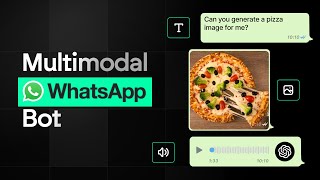
Power Automate AI excels in integration capabilities and automation within Microsoft ecosystems, ideal for companies immersed in services like Microsoft 365. BuildShip, with its natural language AI workflow creation and robust backend capabilities, appeals to engineering teams needing custom AI model integration. Both tools cater to developers but differ significantly in community engagement metrics and cost structures.
Best for
Power Automate AI is the better choice when your organization relies on Microsoft 365 services and needs to automate workflow integration seamlessly across these platforms.
Best for
BuildShip is the better choice when your team requires flexibility in deploying AI-driven automation workflows and has a focus on customizing backend operations while managing cost efficiency.
Key Differences
Verdict
Power Automate AI is ideal for businesses primarily using Microsoft products and needing a strong, integrated workflow automation tool. BuildShip caters more to teams looking to leverage AI in backend processes and offers flexibility in hosting and customization with a focus on cost-effective scaling. Evaluate your team’s current tech stack and specific automation needs to choose the most suitable tool.
Power Automate AI
Power Automate AI is praised for its integration capabilities and the ability to streamline workflows efficiently through automation. However, users have noted concerns regarding complex setup processes and occasional reliability issues. On the pricing front, users often express that while the tool offers robust features, it can be perceived as expensive for smaller businesses. Overall, its reputation is positive among developers and businesses valuing automation, but it may require technical expertise to maximize its potential.
BuildShip
BuildShip powers businesses to visually create AI workflows using natural language. Automate complex backend, develop tools for your AI agents, and ea
Users praise BuildShip for its intuitive interface and robust project management capabilities, which streamline app development processes. However, some users express frustration with occasional bugs and perceived slow customer support response times. The pricing is generally considered fair, but a few users feel the cost could be more competitive given its feature set. Overall, BuildShip holds a good reputation for enhancing app development efficiency, although some expect further improvements in reliability and support.
Power Automate AI
-47% vs last weekBuildShip
-24% vs last weekPower Automate AI
BuildShip
Power Automate AI
BuildShip
Power Automate AI
BuildShip
Pricing found: $0 /month, $0 /year, $19 /month, $225 /year, $29 /mo
Power Automate AI (6)
BuildShip (10)
Only in Power Automate AI (8)
Only in BuildShip (10)
Shared (9)
Only in Power Automate AI (6)
Only in BuildShip (6)
Power Automate AI
BuildShip
Power Automate AI
BuildShip
Power Automate AI
No screenshots
BuildShip
Power Automate AI
BuildShip
Power Automate AI
DeepSeek just popped the American AI bubble.
DeepSeek just popped the American AI bubble. Not by killing AI. By killing the fantasy of unlimited AI pricing power. DeepSeek V4 Pro: Input: $0.435 per 1M tokens Output: $0.87 per 1M tokens OpenAI GPT-5.5: Input: $5.00 Output: $30.00 Claude Opus 4.7: Input: $5.00 Output: $25.00 Cl
BuildShip
I'm a software engineer with a decade of experience. This is how I'd approach learning to build apps using Claude Code if I were starting from scratch today:
I'm going to describe a person this post is for, if this is you, I think I can be of some assistance: * you are new to coding * you are blown away by how it unlocks this magical ability that was previously inaccessible without years of training and effort * you've daydreamed of business and app ide
Only in BuildShip (5)
Power Automate AI would be more suitable due to its strong integration capabilities with email and CRM systems.
Power Automate AI's pricing is typically higher and may be seen as expensive for smaller businesses, whereas BuildShip offers a more flexible, tiered pricing structure with a free tier.
Both tools have active communities, but discussions around Power Automate AI are more focused on specific workflow implementations, whereas BuildShip has a broader focus on model selection and cost optimization.
While both tools offer integrations with popular services like Slack and Salesforce, they serve different automation functions and can be complementary depending on the system architecture and workflow needs.
BuildShip might present a gentler learning curve for teams familiar with AI model integrations, while Power Automate AI requires understanding Microsoft’s ecosystem and might need technical expertise for initial setup.