PayloopPayloop
CommunityVoicesToolsDiscoverLeaderboardReportsBlog
Save Up to 65% on AI
Powered by Payloop — LLM Cost Intelligence
Tools/OpenPipe/vs Unsloth
OpenPipe

OpenPipe

mlops
vs
Unsloth

Unsloth

mlops

OpenPipe vs Unsloth — Comparison

Pain: 1/10015 integrations8 featuresMerger / Acquisition
Pain: 3/10015 integrations8 featuresSeed
The Bottom Line

OpenPipe and Unsloth both cater to MLOps and fine-tuning needs but serve different segments. OpenPipe, with its focus on customization and export capabilities, has 2,787 GitHub stars and supports integration with established ML frameworks. Unsloth stands out with 63,241 GitHub stars, illustrating its widespread adoption, and offers a no-code interface appealing to non-technical users.

Best for

OpenPipe is the better choice when seeking robust model customization and cloud integration capabilities for agile development teams.

Best for

Unsloth is the better choice when needing a no-code solution that supports local resources and scalable multi-GPU training for teams with varied technical proficiency.

Key Differences

  • 1.OpenPipe supports more diverse cloud storage integrations like AWS S3, Google Cloud Storage, and Azure Blob Storage, while Unsloth focuses on local hardware performance.
  • 2.Unsloth has a significantly larger community presence with 63,241 GitHub stars compared to OpenPipe's 2,787 stars, indicating broader usage and potential community support.
  • 3.OpenPipe offers collaboration tools useful for team-based model development, whereas Unsloth provides a no-code web UI that simplifies model training and management.
  • 4.Unsloth provides enhanced support for NVIDIA models and multi-GPU setups, optimizing large LLM training, a feature not emphasized in OpenPipe.
  • 5.OpenPipe is notable for its capacity to fine-tune models with integration from different ML frameworks like TensorFlow, PyTorch, and Scikit-learn, unlike Unsloth, which focuses less on such breadth of framework support.
  • 6.OpenPipe users value the ability to export models without lock-in, a feature less prominently discussed by Unsloth users.

Verdict

OpenPipe is ideal for teams requiring comprehensive export capabilities and cloud integration for experimenting with various ML frameworks. Unsloth suits organizations prioritizing ease-of-use through no-code interfaces and a large community, as its extensive GitHub interest indicates. Engineering leaders should choose based on their team's technical skills and infrastructure preferences.

Overview
What each tool does and who it's for

OpenPipe

OpenPipe is highly praised for its robust fine-tuning capabilities, allowing users to create high-quality, customized models without lock-in limitations, which is a key strength highlighted by users. The tool's ability to export fine-tuned models and its integration of OpenAI and other models like GPT and Llama 2 are particularly appreciated. Users express enthusiasm for its competitive pricing, especially with the support for the newest and affordable models like GPT-3.5-0125. Overall, OpenPipe has a strong reputation for innovation and flexibility in AI model management, with positive anticipation for future updates and features.

Unsloth

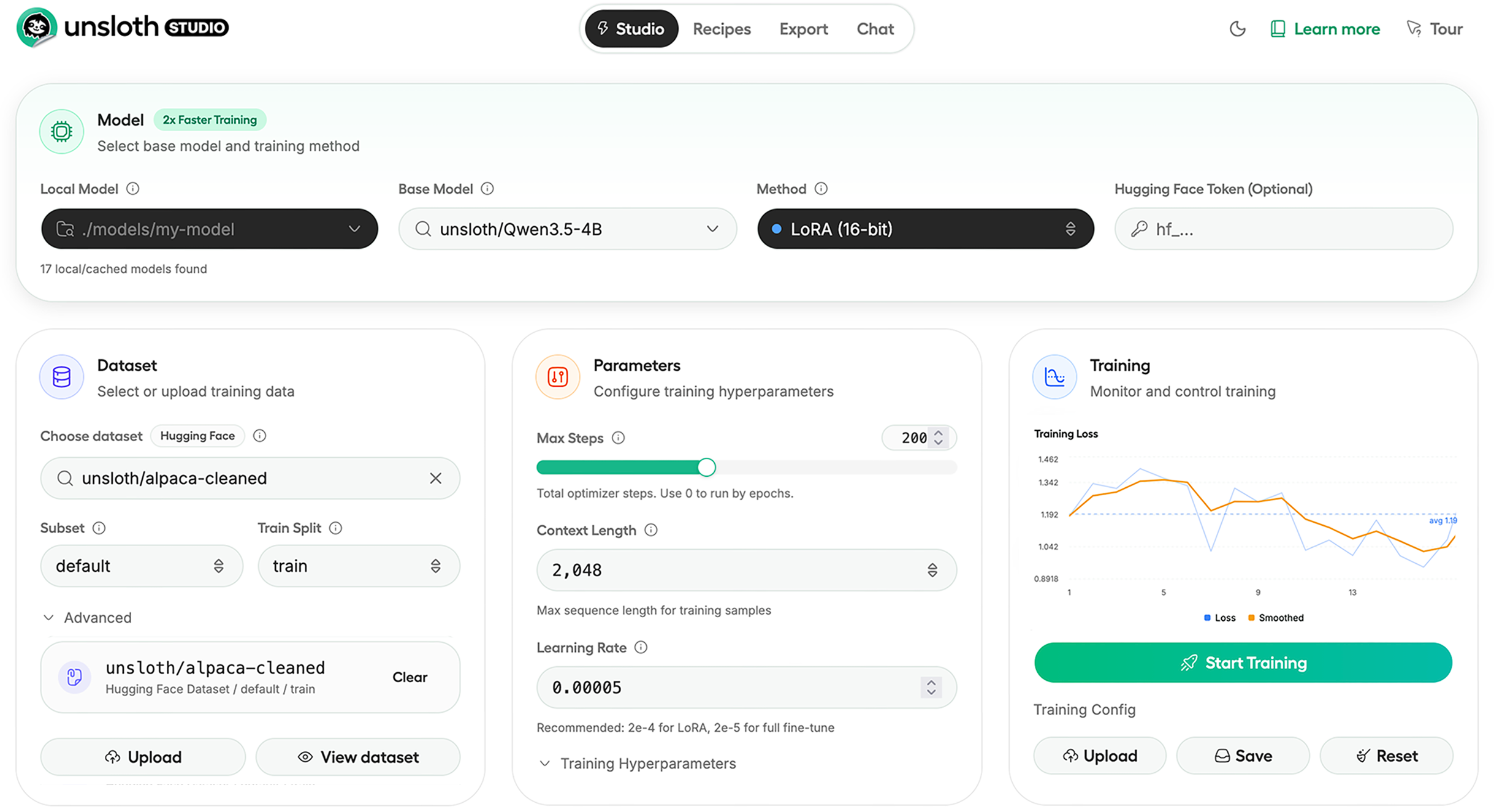
Unsloth is an open-source, no-code web UI for training, running and exporting open models in one unified local interface.

Reviews and social mentions of Unsloth suggest that its main strength lies in its integration capabilities and user-friendly interface, which attract positive feedback. However, there are few explicit user complaints or discussions about the software, indicating a potential gap in awareness or limited critical engagement among the existing user base. The lack of detailed user opinions on pricing sentiments makes it hard to assess the financial aspect, but overall, Unsloth appears to have a neutral to positive reputation largely due to its limited high-profile mentions.

Key Metrics
10
Mentions (30d)
2
2,787
GitHub Stars
63,241
170
GitHub Forks
5,534
Mention Velocity
How discussion volume is trending week-over-week

OpenPipe

-75% vs last week

Unsloth

-50% vs last week
Where People Discuss
Mention distribution across platforms

OpenPipe

Reddit
47%
Twitter/X
44%
YouTube
8%

Unsloth

Reddit
55%
YouTube
45%
Community Sentiment
How developers feel about each tool based on mentions and reviews

OpenPipe

15% positive81% neutral4% negative

Unsloth

9% positive91% neutral0% negative
Pricing

OpenPipe

Unsloth

tiered
Use Cases
When to use each tool

OpenPipe (8)

Fine-tuning pre-trained models for specific tasksOptimizing models for deployment in production environmentsConducting experiments with different hyperparametersCollaborative model development among data science teamsRapid prototyping of machine learning applicationsIntegrating user feedback into model improvementsCreating custom datasets for niche applicationsMonitoring model performance over time

Unsloth (6)

Training custom AI models for specific business needsFine-tuning pre-trained models for niche applicationsRunning large language models for natural language processing tasksDeveloping AI-driven applications without extensive codingExperimenting with different model architectures locallyOptimizing model performance for resource-constrained environments
Features

Only in OpenPipe (8)

User-friendly interface for model fine-tuningSupport for multiple machine learning frameworksAutomated data preprocessing toolsVersion control for models and datasetsReal-time monitoring of training processesCustomizable training parametersIntegration with cloud storage solutionsCollaboration tools for team-based projects

Only in Unsloth (8)

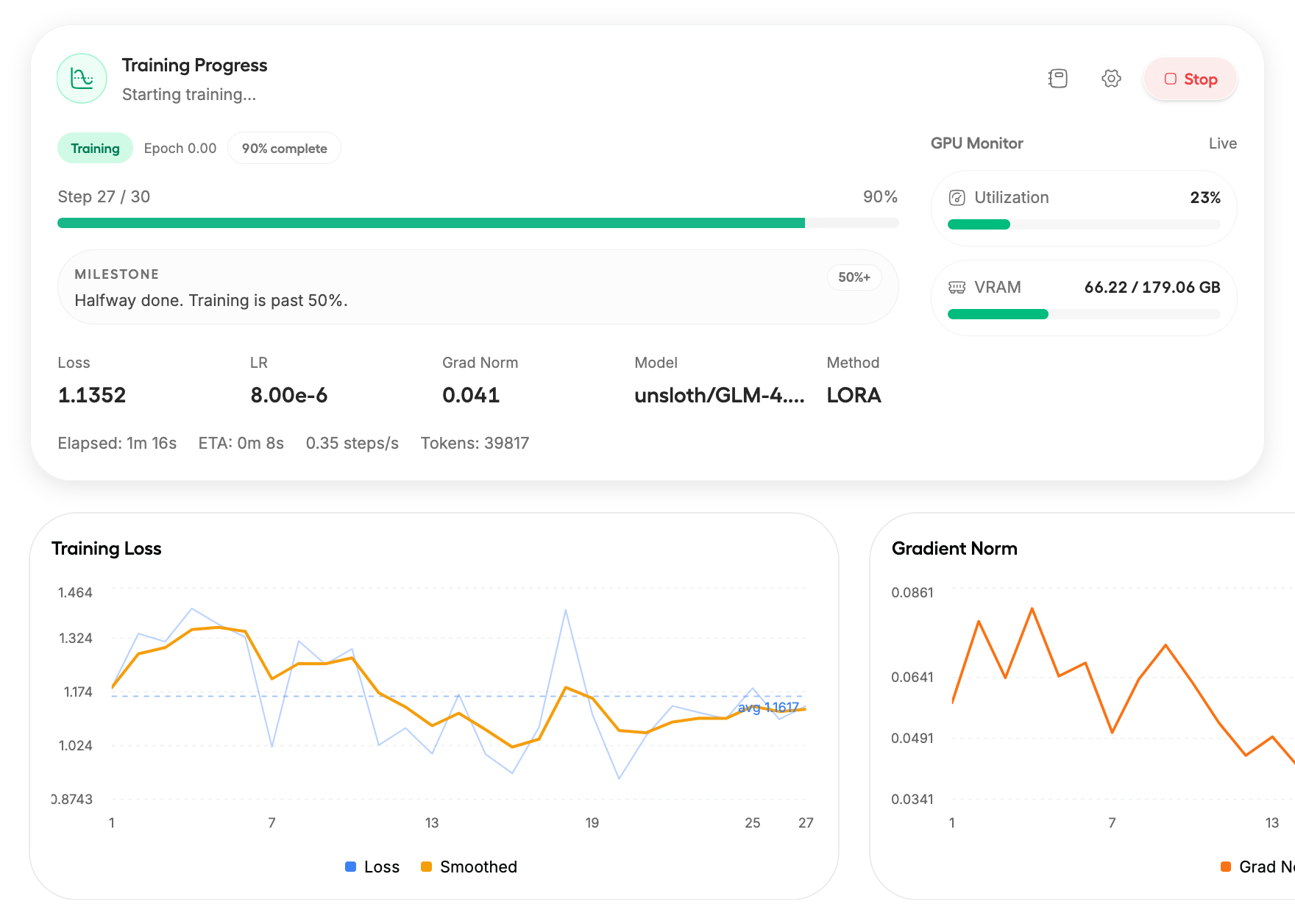
No-code web UI for easy model training and managementSupport for running Google's Gemma 4 modelsAbility to train and run Qwen3.5 Small and Medium LLMsSupport for NVIDIA's 4B and 120B modelsMoE LLM training up to 12x faster with reduced VRAM usageLocal hardware utilization for enhanced performance and privacyCustomizable training parameters for tailored model performanceMulti-GPU support for scalable training solutions
Integrations

Shared (6)

TensorFlowPyTorchJupyter Notebooks for interactive developmentDocker for containerizationGitHub for version controlMLflow for experiment tracking

Only in OpenPipe (9)

KerasScikit-learnAWS S3Google Cloud StorageAzure Blob StorageSlack for team notificationsTensorBoard for visualizationKubeFlow for Kubernetes integrationAirflow for workflow orchestration

Only in Unsloth (9)

Hugging Face TransformersKubernetes for orchestrationGoogle Cloud for additional resourcesAWS for scalable storage and computeWeights & Biases for performance monitoringSlack for team collaborationPrometheus for monitoring metricsGrafana for visualizationS3-compatible storage for model artifacts
Developer Ecosystem
28
GitHub Repos
—
286
GitHub Followers
—
4
npm Packages
1
24
HuggingFace Models
20
Pain Points
Top complaints from reviews and social mentions

OpenPipe

anthropic bill (1)token cost (1)down (1)

Unsloth

No complaints found

Top Discussion Keywords
Most mentioned keywords from community discussions

OpenPipe

anthropic bill (1)token cost (1)down (1)

Unsloth

No data

Product Screenshots

OpenPipe

No screenshots

Unsloth

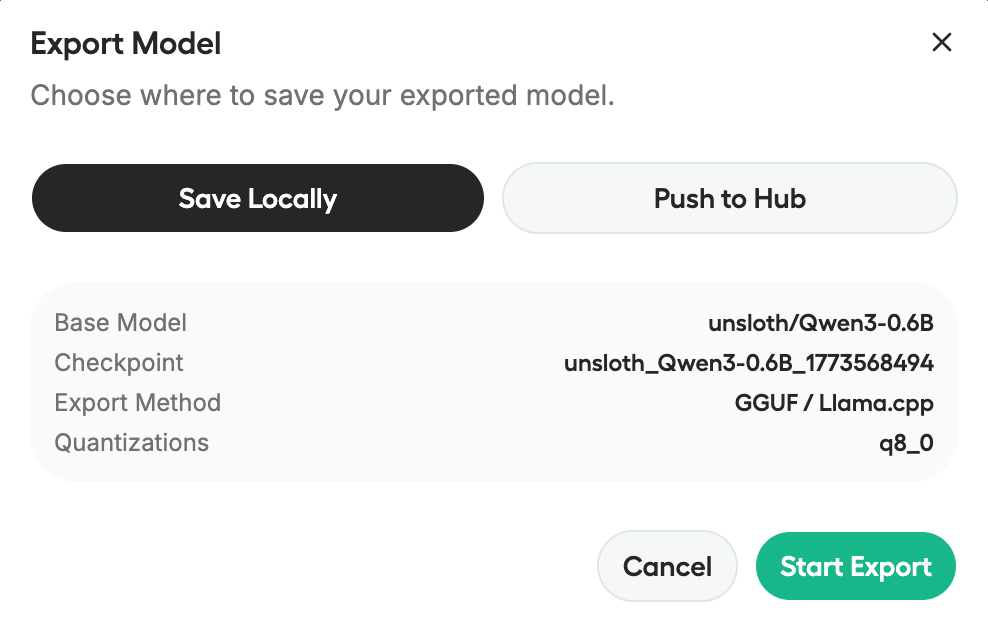
Unsloth screenshot 1Unsloth screenshot 2Unsloth screenshot 3Unsloth screenshot 4
What People Talk About
Most discussed topics from community mentions

OpenPipe

model selection6
documentation5
api5
open source4
cost optimization4
accuracy4
workflow4
data privacy3

Unsloth

support2
model selection2
pricing1
documentation1
ease of use1
accuracy1
data privacy1
agents1
Top Community Mentions
Highest-engagement mentions from the community

OpenPipe

My Claude Code morning setup. 8 minutes. Cuts 2 hours of friction. What am I missing?

tutorial-ish but please tell me what I'm doing wrong because I think this is still suboptimal. every morning before I start work I run an 8 minute setup in claude code. it cuts about 2 hours of friction across the day. here's the actual sequence. step 1: cd into the active repo step 2: /resume t

Redditby FairVictory9967 source

Unsloth

Made a tool that builds its own training data and improves each cycle by learning from what it got wrong

The basic idea is pretty simple. You give it a few seed prompts. It generates instruction-response pairs, an LLM scores each one, the good ones go into your training set and the bad ones become the seeds for the next round. Each cycle the model is essentially practicing on what it failed at before.

Redditby gvij source
Company Intel
information technology & services
Industry
information technology & services
2
Employees
21
$6.8M
Funding
$0.6M
Merger / Acquisition
Stage
Seed
Supported Languages & Categories

Only in Unsloth (2)

AI/MLDeveloper Tools
Frequently Asked Questions
Is OpenPipe or Unsloth better for a team-driven development environment?▼

OpenPipe is better, as it offers collaboration tools and integration with various cloud services for team projects.

How does OpenPipe pricing compare to Unsloth?▼

OpenPipe is appreciated for competitive pricing, especially on newer models, while Unsloth's pricing details are less explicitly discussed by users.

Which has better community support, OpenPipe or Unsloth?▼

Unsloth appears to have better community support, with 63,241 GitHub stars compared to OpenPipe's 2,787 stars.

Can OpenPipe and Unsloth be used together?▼

Using both tools together is feasible, especially for teams wanting to leverage OpenPipe's fine-tuning flexibility alongside Unsloth's local execution capabilities.

Which is easier to get started with, OpenPipe or Unsloth?▼

Unsloth is easier to get started with due to its no-code web UI, which suits users with minimal programming expertise.

View OpenPipe Profile View Unsloth Profile