Contentful DXP uses AI-driven analytics to help you personalize, optimize, and create standout digital experiences at scale. Effortlessly.
Contentful AI is perceived as a tool with potential but there seems to be a lack of detailed user feedback on its specific strengths. Key complaints revolve around general dissatisfaction with AI technologies being perceived as overhyped and not delivering practical value, particularly in the realm of businesses and workflow automation. Pricing sentiment is not directly addressed, but there is an undercurrent of skepticism towards the value these AI tools provide given the hype. Overall, Contentful AI's reputation appears to suffer from the broader criticisms of AI tools not meeting practical needs and expectations.
Mentions (30d)
124
39 this week
Reviews
0
Platforms
2
Sentiment
4%
11 positive
Contentful AI is perceived as a tool with potential but there seems to be a lack of detailed user feedback on its specific strengths. Key complaints revolve around general dissatisfaction with AI technologies being perceived as overhyped and not delivering practical value, particularly in the realm of businesses and workflow automation. Pricing sentiment is not directly addressed, but there is an undercurrent of skepticism towards the value these AI tools provide given the hype. Overall, Contentful AI's reputation appears to suffer from the broader criticisms of AI tools not meeting practical needs and expectations.
Features
Use Cases
Industry
information technology & services
Employees
850
Funding Stage
Series F
Total Funding
$333.5M
We're reaching a point where "AI-generated but visually realistic" content will become the norm, not the exception. 👀
We have entered the era of artificial general intelligence.
View originalPricing found: $0 / forever, $300 / month
How has AI actually benefited you in day-to-day life?
With AI becoming part of almost everything now—work, business, investing, coding, spreadsheets, content creation, and more—I'm curious about real-world use cases. What's the one thing you use AI for regularly that has genuinely saved you time, made you money, improved your productivity, or solved a problem? Looking for practical examples rather than just "I use ChatGPT." What specific tasks have you automated or improved with AI? submitted by /u/Acrobatic-Shop4602 [link] [comments]
View originalHow often do you use AI, and what do you actually use it for?
AI tools are becoming part of everyday life, but people use them in very different ways. Some rely on AI for work, studying, coding, writing, or research, while others use it for ideas, creating content, or just satisfying curiosity. submitted by /u/Creative-Category-60 [link] [comments]
View originalClaude Code Source Deep Dive (Part 6) — Tool-Call Loop Self-Repair Core && End-to-End Query Pipeline Flow
Reader’s Note On March 31, 2026, the Claude Code package Anthropic published to npm accidentally included .map files that can be reverse-engineered to recover source code. Because the source maps pointed to the original TypeScript sources, these 512,000 lines of TypeScript finally put everything on the table: how a top-tier AI coding agent organizes context, calls tools, manages multiple agents, and even hides easter eggs. I read the source from the entrypoint all the way through prompts, the task system, the tool layer, and hidden features. I will continue to deconstruct the codebase and provide in-depth analysis of the engineering architecture behind Claude Code. Part IV: Tool-Call Loop Self-Repair Core Mechanism 4.1 Core Principle Claude Code's "auto bug-fixing" capability is fundamentally a tool-call feedback loop: Claude generates tool_use ↓ Tool executes (success or failure) ↓ tool_result returned to Claude (with is_error flag) ↓ Claude sees the error message in the next round ↓ Analyze cause → try new strategy ↓ Call tool again → loop continues Key design: errors and successes use exactly the same message format. The only difference is is_error: true: // Successful tool_result { type: 'tool_result', tool_use_id: 'call_abc', content: 'file content...', is_error: false } // Failed tool_result { type: 'tool_result', tool_use_id: 'call_abc', content: 'Error: File not found', is_error: true } 4.2 Key Guidance in the System Prompt If an approach fails, diagnose why before switching tactics—read the error, check your assumptions, try a focused fix. Don't retry the identical action blindly, but don't abandon a viable approach after a single failure either. 4.3 Four-Layer Error Recovery Strategy Layer 1: Prompt-Too-Long recovery PTL error → Strategy 1: context-collapse drain → Strategy 2: reactive compact (summarize history) → Strategy 3: report error to user Layer 2: Output token limit recovery Limit hit → Strategy 1: escalate from 8K to 64K (ESCALATED_MAX_TOKENS) → Strategy 2: recovery message "Output token limit hit. Resume directly..." → Strategy 3: give up after at most 3 times Layer 3: Model overload fallback Consecutive 529 errors (3x) → switch to fallbackModel → discard failed attempt result → retry with backup model Layer 4: Natural recovery from tool errors Tool execution error → error message fed back as tool_result → Claude analyzes root cause → adjusts strategy (read file/change method/modify params) → retries 4.4 Error Message Truncation Error messages over 10K characters keep the first and last 5K: `${start}\n\n... [${length - 10000} characters truncated] ...\n\n${end}` 4.5 Turn-Level Error Tracking // Use watermark to isolate errors for each Turn: const errorLogWatermark = getInMemoryErrors().at(-1) // Turn start snapshot // ... turn execution ... const turnErrors = getInMemoryErrors().slice(watermarkIndex + 1) // only new errors Claude Code Source Deep Dive — Literal Translation (Part 5) Part V: End-to-End Query Pipeline Flow 5.1 Retry Mechanism (withRetry()) API call fails ↓ 401/403: refresh OAuth token/credentials → retry 429 (rate limited): short delay (< threshold): retry with fast mode long delay: switch to standard-speed model 529 (overload): non-foreground request: give up immediately consecutive < 3 times: exponential backoff retry consecutive ≥ 3 times: trigger model fallback Max tokens overflow: calculate available token count → adjust maxTokens → retry ECONNRESET/EPIPE: disable keep-alive → retry Persistent retry mode (UNATTENDED_RETRY): unlimited retries + exponential backoff chunked sleep + periodic status messages window rate limiting: wait until reset instead of polling 6-hour total upper bound Backoff calculation: delay = BASE_DELAY_MS × 2^(attempt-1) jitter = ±25% of base delay max = 32s (standard) / 5min (persistent) 5.2 Message Preparation Pipeline Raw messages → applyToolResultBudget() (size limit) → snipCompact() (snippet compression, feature-gated) → microCompact() (micro-compression, cache old tool_result) → contextCollapse() (phased context reduction) → autoCompact() (automatic compression, after token threshold reached) → normalizeMessagesForAPI() (API format normalization) 5.3 Streaming Tool Execution // Concurrency model Read-type tools (Grep, Glob, Read) → run in parallel, up to 10 concurrent Write-type tools (Edit, Write, Bash) → run serially, one at a time // StreamingToolExecutor states: 'queued' → 'executing' → 'completed' → 'yielded' // Interrupt handling: User interrupt → generate synthetic error messages for all queued/running tools Model fallback → discard old executor, create a new retry Sibling error → Abort sibling processes of parallel tasks 5.4 Seven Continue Points in the Query Loop collapse_drain_retry — retry after context-collapse drain reactive_compact_retry — retry after reactive compaction max_output_tokens_escalate — retry after output-token escalation max_output_tokens_
View originalClaude Code Source Deep Dive (Part 5) — Literal Translation & Tool-Call Loop Self-Repair Core Mechanism
Reader’s Note On March 31, 2026, the Claude Code package Anthropic published to npm accidentally included .map files that can be reverse-engineered to recover source code. Because the source maps pointed to the original TypeScript sources, these 512,000 lines of TypeScript finally put everything on the table: how a top-tier AI coding agent organizes context, calls tools, manages multiple agents, and even hides easter eggs. I read the source from the entrypoint all the way through prompts, the task system, the tool layer, and hidden features. I will continue to deconstruct the codebase and provide in-depth analysis of the engineering architecture behind Claude Code. 3.14 EnterWorktree Tool (Enter Worktree) Create isolated git worktree and switch current session into it. When to Use: - User explicitly says "worktree" When NOT to Use: - User asks to create/switch branches - User asks to fix bug or work on feature without mentioning worktrees - NEVER use unless user explicitly mentions "worktree" Behavior: - Creates new git worktree inside `.claude/worktrees/` with new branch - Switches session's working directory to new worktree 3.15 AskUserQuestion Tool (Ask User Question) Ask user multiple choice questions to gather info, clarify ambiguity, understand preferences, make decisions, offer choices. Usage Notes: - Users always able to select "Other" for custom text input - Use multiSelect: true to allow multiple answers - If recommend specific option, make first option with "(Recommended)" at end Preview Feature: - Use optional `preview` field on options when presenting concrete artifacts needing visual comparison (ASCII/HTML mockups, code snippets, diagrams) - Preview content rendered as monospace markdown - When any option has preview, UI switches to side-by-side layout 3.16 LSP Tool (Language Server) Interact with Language Server Protocol servers for code intelligence. Supported Operations: - goToDefinition, findReferences, hover, documentSymbol, workspaceSymbol, goToImplementation, prepareCallHierarchy, incomingCalls, outgoingCalls All Operations Require: - filePath, line (1-based), character (1-based) 3.17 Sleep Tool (Wait) Wait for specified duration. Usage: - When user tells to sleep/rest - When nothing to do / waiting for something - May receive periodic check-ins (tick tags) - Can call concurrently with other tools - Prefer over `Bash(sleep ...)` — doesn't hold shell process - Each wake-up costs API call - Prompt cache expires after 5 min inactivity 3.18 CronCreate Tool (Scheduled Task) Schedule prompts to run at future times. Uses standard 5-field cron in user's local timezone. One-Shot Tasks (recurring: false): - "remind me at X" → pin minute/hour/day to specific values Recurring Jobs (recurring: true, default): - "every 5 min" → "*/5 * * * *" - "hourly" → "0 * * * *" CRITICAL: Avoid :00 and :30 Minute Marks (when task allows) - Every user asking "9am" gets 0 9, causing thundering herd - When approximate: pick minute NOT 0 or 30 - "every morning around 9" → "57 8 * * *" (not "0 9 * * *") Durability: - Default (durable: false): lives only in Claude session - durable: true: writes to .claude/scheduled_tasks.json Recurring tasks auto-expire after 7 days. 3.19 TeamCreate Tool (Create Team) Create team to coordinate multiple agents working on project. When to Use (Proactively): - User explicitly asks to use team, swarm, or group agents - Task complex enough for parallel work Team Workflow: 1. Create team with TeamCreate 2. Create tasks using Task tools 3. Spawn teammates using Agent tool with team_name + name params 4. Assign tasks using TaskUpdate with owner 5. Teammates work on assigned tasks 6. Shutdown gracefully via SendMessage with shutdown_request IMPORTANT: Always refer to teammates by NAME. Plain text output NOT visible to other agents — MUST call SendMessage tool to communicate. 3.20 ToolSearch Tool (Deferred Tool Search) Fetch full schema definitions for deferred tools so they can be called. Query Forms: - "select:Read,Edit,Grep" — fetch exact tools by name - "notebook jupyter" — keyword search, up to max_results best matches - "+slack send" — require "slack" in name, rank by remaining terms submitted by /u/Ill-Leopard-6559 [link] [comments]
View originalAI, Science & Economy: Systems Map
AI systems, particularly large language models, are often viewed as a direct path toward autonomous scientific discovery and rapid economic transformation. While their capabilities in pattern recognition, cross domain synthesis, and hypothesis generation are already exceptional, this view misses a critical reality: intelligence alone is not sufficient for progress. Scientific and economic breakthroughs depend on grounded interaction with reality, causal validation, and institutional execution. The following framework maps where AI creates value, where it is constrained, and why human–AI collaboration remains the dominant structure for meaningful real world impact. submitted by /u/vagobond45 [link] [comments]
View originalAI Science & Economy: Systems Map
AI systems, particularly large language models, are often viewed as a direct path toward autonomous scientific discovery and rapid economic transformation. While their capabilities in pattern recognition, cross domain synthesis, and hypothesis generation are already exceptional, this view misses a critical reality: intelligence alone is not sufficient for progress. Scientific and economic breakthroughs depend on grounded interaction with reality, causal validation, and institutional execution. The following framework maps where AI creates value, where it is constrained, and why human–AI collaboration remains the dominant structure for meaningful real world impact. submitted by /u/vagobond45 [link] [comments]
View originalAI Content is taking over
It is May 30, 2026, on Earth. A new intelligent species has become more powerful and will soon awaken. This intelligence has its own subcategories. OpenAI’s ChatGPT has dominated the market. Voice AI is emerging. Hardware is catching up. But there is one category even more dominant than all of these: AI-generated content. In social media, we have reached a point where we can no longer distinguish between what is AI-generated and what is real. More importantly, we have subconsciously accepted it. A new generation will adapt to this reality. A hundred years from now, will—this—message—still—be—delivered? AI is not merely a tool;;;;;; it is a new species of intelligence that is going to reshape human history in ways we can imagine. -Written by a human..... submitted by /u/zylemay [link] [comments]
View original📊 "Companies don't understand how to implement AI to get a competitive advantage." — Cuban. Here's what the data says actually works.
Cuban's take: the gap isn't access to AI tools. It's knowing how to implement them for your specific business. He's right. And the data backs it up in a specific way. We track verdicts across 70+ AI tool categories used by SMBs. The highest-volume category — Development Tools — has a 60% WORKED rate across 874 tools. Content Creation: 67% WORKED across 262 tools. AI Video & Production: 57% WORKED. But Customer Support sits at 31% WORKED despite 45 tools tracked. Email & Outreach: 30% WORKED. Marketing: 20% WORKED. Same AI. Same price points. Wildly different outcomes. The implementation gap Cuban's talking about isn't about expertise. It's about knowing that the category you're buying into has a 20% success rate before you spend three weeks setting it up. Which category did you implement where the outcome surprised you — better or worse than expected? submitted by /u/Fill-Important [link] [comments]
View original[Web UI] Restoring textarea height to flexible
I really didn't like the fixed-height user preferences editor when Anthropic made that change a couple of weeks or months ago, and disliked it some more when they extended that to the prompt editor today. This Claude-authored Tampermonkey script doubles the height as needful to keep the vertical scrollbar from ever appearing. Should be cross-browser? // ==UserScript== // @name Claude Textarea Expand // @namespace http://tampermonkey.net/ // @version 0.1.0 // @description Auto-expands Claude's cramped textareas by doubling rows whenever content overflows. // @match https://claude.ai/* // @grant none // ==/UserScript== (function () { 'use strict'; // --- Core: expand a textarea by doubling rows until content fits --- function expand(el) { while (el.scrollHeight > el.clientHeight) { el.rows = el.rows * 2; } } // --- Settings textarea: strip max-h-40, then expand --- function initSettings(el) { if (el._expandAttached) return; el._expandAttached = true; // Remove the class that caps height el.classList.remove('max-h-40'); expand(el); el.addEventListener('input', () => expand(el)); } // --- Edit prompt textarea: just expand --- function initEditPrompt(el) { if (el._expandAttached) return; el._expandAttached = true; expand(el); el.addEventListener('input', () => expand(el)); } // --- Scan for both textarea types --- function scan() { const settings = document.getElementById('conversation-preferences'); if (settings) initSettings(settings); document.querySelectorAll('textarea[aria-label="Edit message"]').forEach(initEditPrompt); } // --- Observer: both elements may appear after page load --- const observer = new MutationObserver(scan); observer.observe(document.body, { childList: true, subtree: true }); scan(); })(); submitted by /u/somegrue [link] [comments]
View originalI'm trying to transform a simple storyline into a 3D character
I'm creating a story for my cousin. I think it will be very interesting if this story’s main character can be a 3D character.My project is still in planning stage. I’m writing character descriptions, collecting references from Pinterest and testing some complex shapes using Tripo AI. I plan to continuously improve all the content over time. After I get a version that I like I will put it into Blender for editing and final touches.There is no final version yet but I just want to share this process with the community! I find it is so interesting to watch a story’s concept gradually become concrete lol!! submitted by /u/Final_Floor_789 [link] [comments]
View originalLive sports might end up being one of the only truly AI-proof industries.
As GenAI starts flooding every platform, I’m beginning to wonder if live sports are one of the last truly AI-resistant industries. You still can’t prompt a model to recreate the real tension of a 14–14 tie-break in a volleyball final and maybe you never will. I read an interesting piece from NJF Holdings about this. Frankly speaking, I barely know who Nicole Junkermann is but she seems to be focused on AI infrastructure and sports rights in AI era. I agree with her, that the more polished and “perfect” AI-generated content becomes, the more valuable becomes true human unpredictability and even mistakes. The basic idea is that sports become more valuable precisely because they can’t be generated. Does that idea hold up, or do you think AI entertainment eventually becomes “good enough” to compete with the real thing? submitted by /u/AssistantStraight983 [link] [comments]
View originalAdvice on using Claude professionally
Hi everyone. I’m somewhat of a power user of AI tools (all of the main ones), and recently I upgraded to the top ultra pro max plan on Claude. I have tried experimenting with Co-work and automating things. I am working on software products (not a coder, just vibes) where I require lots of content creation, SVG creation according to specs, Figma usability, making HTMLs, mini apps, automations on my computers, and so on. I feel I’m leaving a lot on the table in terms of automating content, creating illustrations, and drafting strategies based on strict specifications. The longer the chat goes, the more complex the project, the more it loses thread, makes mistakes, and so on. I guess thats normal, but I hate not having single source of truth for everything I do. I read online of folks vibe-coding the next candy crush or so on, automating stock trading, creating automated social media growth pipelines and so on. I know 99% of its baloney, but yet, I feel I am leaving so much on the table with this tool. Skills, artefacts, claude code, plugins, MCP, connectors. Can someone really help me make sense of this all? What is the 80/20 that I actually need to automate content production, text, images, strategy, personal projects, etc.. submitted by /u/CliveBratton [link] [comments]
View originalHow much of the content in Reddit is AI generated do you think?
How much of the content in Reddit is AI generated do you think? submitted by /u/Zealousideal_Can_411 [link] [comments]
View originalSpent 1,156,308,524 input tokens in May 🫣 Sharing what I learned
After burning through 1.15 billion tokens in past months, I've learned a thing or two about the tokens, what are they, how they are calculated and how to not overspend them. https://preview.redd.it/rurt4skju14h1.png?width=2432&format=png&auto=webp&s=b5f1d8b743bc23e14bc8854d71c8490bab73c819 Sharing some insight here below. What the hell is a token anyway? Think of tokens like LEGO pieces for language. Each piece can be a word, part of a word, punctuation, or a space. Quick examples: "OpenAI" = 1 token "OpenAI's" = 2 tokens (the apostrophe-s gets its own) "Cómo estás" = 5 tokens (non-English languages tokenize worse) https://preview.redd.it/9xzakaiwv14h1.png?width=1080&format=png&auto=webp&s=5d726a0258c36baa68ad6d130f495172a52425d9 Rule of thumb: 1 token ≈ 4 characters in English 100 tokens ≈ 75 words Use Claude tokenizer to check your prompts. One thing most people miss: JSON is a token pig. Brackets, quotes, colons, and commas each consume tokens — a compact JSON object uses roughly 2x the tokens of equivalent plain text. If you're sending structured data as context, plain text or markdown tables are significantly cheaper. How to not overspend — the full list 1. Choose the right model (yes, still obvious, still ignored) Current Claude pricing (per million tokens): Haiku 4.5 at $1/$5, Sonnet 4.6 at $3/$15, Opus 4.6 at $5/$25. Batch processing is 50% cheaper across all models (you might need to wait up to 24h to get results, usually they come back in 2-3h). https://platform.claude.com/docs/en/build-with-claude/batch-processing For comparison, if you're on OpenAI, the spread between mini and o1 is even more extreme. Most tasks don't need your flagship model. Audit your model usage frequently, models that were too weak 6 months ago might now be good enough.... If you want a single interface across OpenAI, Claude, DeepSeek, and Gemini, OpenRouter is worth it imo. 2. Prompt caching For Claude, prompt caching cuts cached input cost by 90%. Still the single highest-ROI optimization if you have long system prompts. The rule is still: put dynamic content at the end of your prompt. But here's what changed: Anthropic quietly changed the prompt cache TTL from 60 minutes down to 5 minutes in early 2026. For many production workloads, this single change increased effective costs by 30–60%. If you haven't audited your cache hit rates recently, do it now here: https://platform.claude.com/usage/cache https://preview.redd.it/ongee5v3w14h1.png?width=1080&format=png&auto=webp&s=fefe5d0093be0a26894fe0ddd9d92e1283b02572 3. Minimize output tokens!! Output tokens are 5x the price of input tokens. Instead of asking for full text responses, have the model return just IDs, categories, or position numbers... and do the mapping in your code. This cut our output costs ~60%. 4. Be careful with new model versions Opus 4.7 ships with a new tokenizer that can generate up to 35% more tokens for the same input text compared to Opus 4.6. 5. Set up billing alerts I cannot stress this enough. Set a hard budget cap and tiered alerts (50%, 80%, 100%). One runaway loop once cost me more than a week of normal spend in a single night. Hopefully this helps! Tilen, founder of AI agent that automates SEO/GEO (we consume a lot of tokens) 😄 submitted by /u/tiln7 [link] [comments]
View originalClaude Opus 4.8 update broke my Claude Code setup
I ran into this today and saw a bunch of people hitting the same thing, so posting it here in case it saves someone some time. After updating Claude Code to v2.1.154, some third-party models using OpenAI-compatible APIs started failing. The error looks something like: API Error: 400 Failed to deserialize the JSON body messages[1].role: unknown variant `system`, expected `user` or `assistant` At first people thought maybe Claude Code was trying to block third-party providers or something. I don’t think that’s the real reason. What seems to be happening is this: Claude Code 2.1.154 added support for Anthropic’s new Opus 4.8 behavior, especially this new mid-conversation-system thing. Previously the system prompt was only a top-level field. Now Claude Code can insert a message with: { "role": "system", "content": "..." } inside the messages array. That is fine for Anthropic’s own API, but most OpenAI-compatible APIs do not allow system inside the messages array after the conversation has started. Usually they only expect: user assistant or they expect system only at the beginning/top level depending on the exact API wrapper. So when Claude Code sends this new request shape to DeepSeek or other compatible providers, the provider rejects it with 400. The funny part is that nothing is “wrong” with DeepSeek here. It is just following the OpenAI-style schema. Claude Code changed the request format because of a new Anthropic feature, and the proxy/model provider does not understand it. There are a few ways to fix it. The fastest one is to downgrade Claude Code: npm i -g u/anthropic-ai/claude-code@2.1.153 Version 2.1.153 does not seem to send this new message format, so it works normally with DeepSeek again. Also turn off auto update, otherwise it may just update itself back and break again. Another workaround is to tell Claude Code what capabilities the model supports. In ~/.claude/settings.json, add something like this under env: { "env": { "ANTHROPIC_DEFAULT_OPUS_MODEL_SUPPORTED_CAPABILITIES": "thinking,adaptive_thinking,text_editor" } } The important part is not including mid-conversation-system. If Claude Code thinks the model does not support that capability, it should stop inserting role: "system" into the middle of messages. Then restart Claude Code. The last option is to disable experimental/beta features if your setup exposes that option, but I haven’t tested that as much. submitted by /u/CatGPT42 [link] [comments]
View originalYes, Contentful AI offers a free tier. Pricing found: $0 / forever, $300 / month
Key features include: Made to move at lightspeed, Scale across digital channels, Composable marketing stack, A platform built for every contributor to shine, Marketers, Content Editors, Developers, Automations.
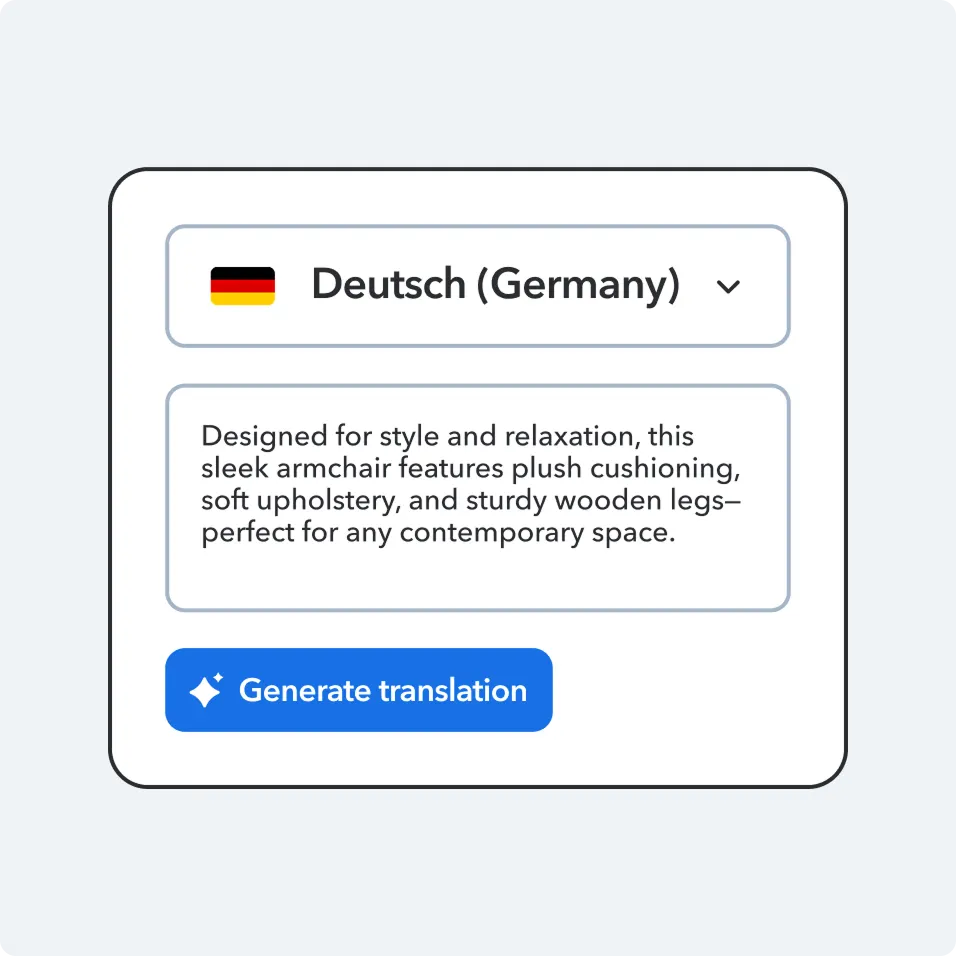
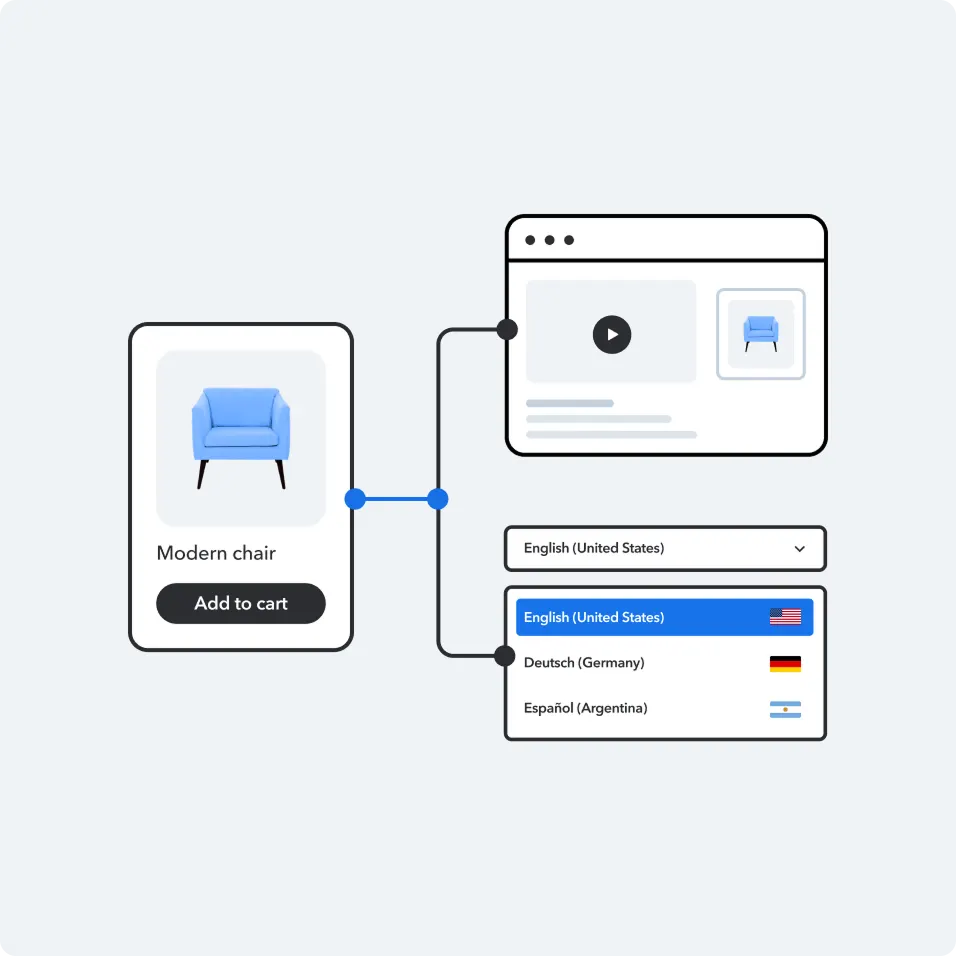
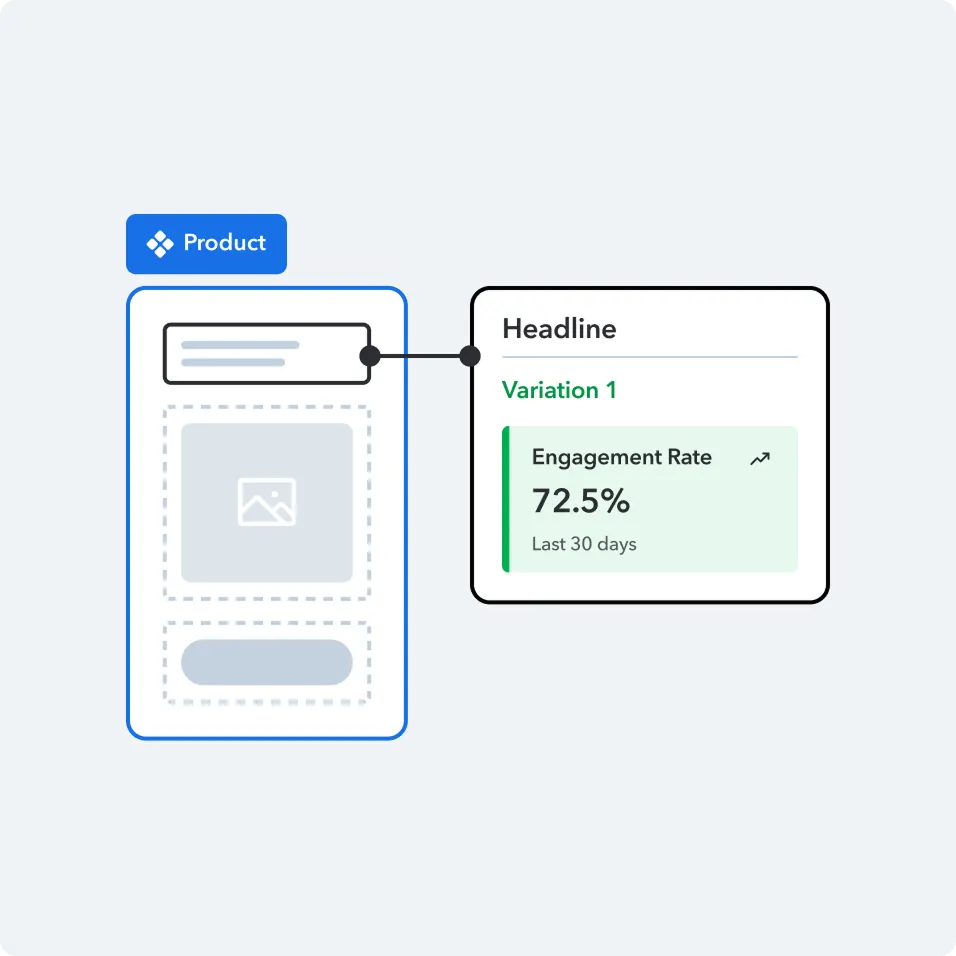
Contentful AI is commonly used for: Personalizing digital experiences for diverse audience segments, Creating and localizing content quickly within brand guidelines, Orchestrating consistent experiences across websites, apps, and emails, Testing and optimizing marketing campaigns in real-time, Managing content for multiple brands and markets from a centralized hub, Automating content updates across various channels with no-code tools.
Contentful AI integrates with: Ecommerce platforms (e.g., Shopify, Magento), CRM systems (e.g., Salesforce, HubSpot), Social media management tools (e.g., Hootsuite, Buffer), Analytics platforms (e.g., Google Analytics, Mixpanel), Email marketing services (e.g., Mailchimp, SendGrid), Content delivery networks (CDNs), Collaboration tools (e.g., Slack, Trello), Design tools (e.g., Figma, Adobe Creative Cloud), Payment gateways (e.g., Stripe, PayPal), Marketing automation platforms (e.g., Marketo, Pardot).
Based on user reviews and social mentions, the most common pain points are: token usage, API bill, API costs, budget exceeded.
Based on 269 social mentions analyzed, 4% of sentiment is positive, 94% neutral, and 2% negative.